


+351 256 135 003
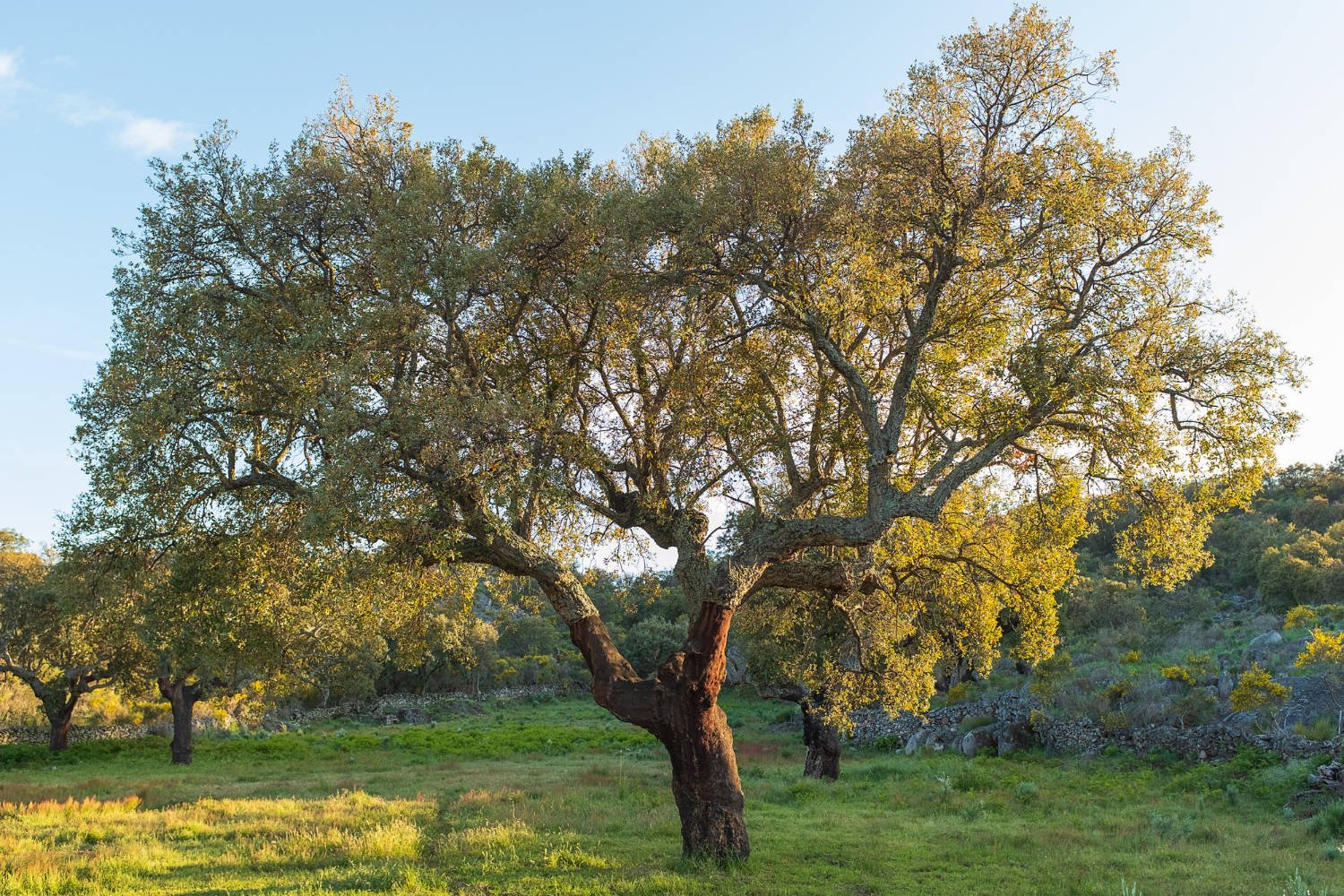
What is Cork?
Cork is the bark of the cork oak tree (Quercus suber L). It is a fully natural raw material with unique properties that give it an unparalleled character. It is lightweight, impermeable to liquids and gases, elastic and compressible, a thermal and acoustic insulator, has slow combustion and is highly resistant to friction. Furthermore, it is completely biodegradable, renewable and recyclable.
Waterproof
Compressible
Thermal Insulator
Acoustic Insulator
Slow Combustion
Abrasion Resistant
Biodegradable
What is Cork made of?
Cork is composed of cells of suberin in the shape of a tiny pentagonal or hexagonal prism, a complex fatty aci, and is filled with a gas similar to air, which occupies about 90% of its volume. It has an average density of around 200 kg/m³ and low thermal conductivity.
Chemical composition of Cork
- Suberin (45%) – the main component of the cell walls, responsible for the elasticity of cork;
- Lignin (27%) – insulating compound;
- Polysaccharides (12%) – components of the cell walls that help define the texture of cork;
- Tannins (6%) – polyphenolic compounds responsible for the color;
- Ceroids (5%) – hydrophobic compounds that ensure the impermeability of cork.
Granules
The granules are composed of cork fragments, obtained by crushing or grinding prepared or manufactured/transformed cork through cutting, and classified by granulometry and bulk density. Its production is intended for the manufacture of agglomerated cork stoppers and decorative pieces.
| Granulate 3/7 | 70 – 75 kg/m3 |
| Granulate 2/4 | 65 – 70 kg/m3 |
| Granulate 1/2 | 55 – 60 kg/m3 |
| Granulate 1/2 | 90 – 120 kg/m3 |
| Granulate 0.5/1 | 50 – 55 kg/m3 |
| Granulate 0.5/1 | 70 – 90 kg/m3 |
